Sunday, July 26, 2020

What if...?

While taking care of the final details of my mother’s estate, I took a break each day to do one of my favorite summer time activities: floating on an inner tube (any body of water will do). Bobbing on the small waves of Peconic Bay was a perfect meditative exercise to ponder matters related to our shared ministry. I’ve had time to think about what we are facing and listen for the still small voice of God. I’ve reflected on online worship, the many reopening plans received, and the honesty we as a nation and church are having about race. I’ve spent time pondering the COVID-19 pandemic trajectory and the ways it will impact our lives for months to come. 


I began to wonder. 


What if we were as meticulous about combating the virus of racism as we are about the coronavirus?


What if, as we did a quick body scan (do I have a sore throat? A fever? Am I masked? Did I wash my hands?), we did a quick check scan of our racism and privilege (am I listening to the voices of siblings of color? Am I considering how I engage in micro-aggressions? What does my body feel and what emotions surface when I’m in conversations about race?)?


What if, as we implement plans to open the doors of our church for in-person worship, we aren’t paying attention to new ways we are being called to worship in the 21st century?


What if, instead of stressing on who can and can’t worship in person due to age, risk factors, or hitting the threshold for how many/few can be in the sanctuary at the same time, we fretted over who in our community we are not reaching with Good News and thought of new and creative ways be in relationship with them?


What if the hours we are taking to clean our building after each use was spent making sure hungry families in our community had something to eat?


What if we discovered that spirituality doesn’t just need an hour on Sunday but the daily disciplines that make our lives be a prayer and our actions a hymn of praise?


I’d love to hear your thoughts on these questions!


Be well. Wear a mask. Stay safe.

Saturday, July 11, 2020

Railside Redemption

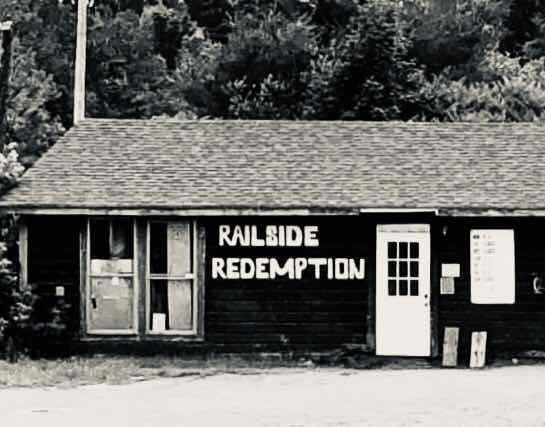
Last week, I saw a former train station that now had a sign declaring “Railside Redemption”. Of course, I immediately wondered what kind of church had taken up residence there, only to chuckle to find out it was the recycle center for the region!


But it did get me thinking: where, in the midst of COVID-19, are the places where God’s saving grace found in Jesus Christ being experienced? If the church building is closed, where is the church as the Body of Christ now moving in communities, touching and changing lives?

When we go to the supermarket, are we attending the Grocery Store of Grace? When we get take-out from a restaurant, are we stopping by the Resurrection Restaurant? As we socially distance with friends on the porch, are we sitting at the Patio of Promise? Where, now, are you experiencing Holy Ground, that place where you are surprised by a God who shows up to offer new life in the most unusual ways in the most common of places? More importantly, how are YOU, as you move in the world, bringing the light of God to the forgotten corners of human existence?

The Holy Spirit has pushed us out of our church buildings and into our streets. We can no longer close the doors of our church buildings—or our hearts—to the sufferings of our neighbors. Our hymn singing can no longer drown out the cries of the poor. Our offerings no longer need to prop up a building that has had decades of deferred maintenance but instead can build much needed ministries that can transform individuals, families, communities, and a world as we seek to bring healing as Christ’s hands to a broken world.

Wear a mask. Stay safe.


Sunday, March 22, 2020

Learning the Unforced Rhythms of Grace


I am praying as I do every Saturday, for the laity and clergy of the Mountain Sky Conference as we continue to learn how to gather as the Body of Christ in new ways as we seek to reduce the impact of the coronavirus in our communities.

I want to thank you all for the ways you have been discovering how to worship together even when we aren’t able to be physically present with one another and continue in mission and ministry together. Our lives have been abruptly disrupted as we seek to lower the rate of infection of the coronavirus so we don’t overload our health care system.

In the last week, schools have closed, many business are having employees work remotely from home, in-restaurant dining has closed, we are being advised not to gather in groups larger than ten, and we are practicing physical distancing. So much change, so quickly. It is dizzying as we learn new ways of working, being with our children, and maintaining relationships. I don’t know about you, but I feel as if we just crammed several years of living into a single week.

This disorientation is exhausting. How do we regain our balance in these days we are living?

In Matthew 11:28-30 in the Message version, Jesus says:  “Are you tired? Worn out? Burned out on religion? Come to me. Get away with me and you’ll recover your life. I’ll show you how to take a real rest. Walk with me and work with me—watch how I do it. Learn the unforced rhythms of grace. I won’t lay anything heavy or ill-fitting on you. Keep company with me and you’ll learn to live freely and lightly.”

This has been the scripture that has guided me all week, as I adjusted to life and work at home—I hope it can be helpful to you, too, as we reorder our life during this pandemic. Sink into your spiritual disciplines and find Jesus beckoning to you: keep company with me and you’ll learn how to live freely and lightly. 

May you find yourself learning the unforced rhythms of grace. Slowing down to see where God is in all this, offering you rest and new life. May you discover the ways grace has always been breaking into your life but you’ve been too busy to notice. May this grace help you find balance as you walk and work with Jesus so that in this time of disruption, you might recover your life more fully and completely.

Take care, precious servants of God, we need you.

Saturday, March 14, 2020

Doors May Be Closed, But the Church is Open


Each Saturday I pray for the clergy and laity of the Mountain Sky Conference, as we get ready for worship. I pray that you will greet one another and newcomers with a generous and warm hospitality; that the burdens and joys you bring will be lifted together in prayer to God, that the Word spoken will both challenge and comfort you in your faithful living, and that the music will shake something lose in you so that its message will bring you healing and hope, and that when you rise from your pew, you will have found yourself changed by the whole worship experience: you will live your Monday more deeply as a disciple than ever before.

But tomorrow, most of our churches will not be holding worship in an attempt to slow the rate of transmission so our local health care systems will not be overwhelmed by a spike in infections. By closing our doors, we are living into the first General Rule of our church: do no harm. We are also following Christ’s command to love our neighbor by protecting the most vulnerable in our midst: the elderly as well as those with underlying health conditions, because the mortality rates in these populations are so high.

But just because the doors of the church will be closed doesn’t mean the church is closed. This is a moment for us to step forward in our communities as the hands of Christ and offer love in bold tangible ways. In order to do that, may we in these days of pandemic response sink more fully into our individual and communal growth through the spiritual discipline found in the means of grace.

For we United Methodists, the means of grace are inward and outward focused to help us be open to God’s work in us to strengthen our faith.

In the days to come, may you order your life together in reading and studying scripture, in prayer and fasting, in caring for our bodies as well as engaging in Christian conferencing.

But the means of grace don’t stop with us, the means of grace also includes doing good works, visiting the sick, visiting those in prison, feeding the hungry, and giving generously to the needs of others as well as seeking justice, ending oppression and discrimination and addressing the needs of the poor

We are in uncharted waters. Your ministry is needed in vital, life-saving ways. May the work of your church be undergirded by the ways you will engage in the means of grace so that together, you and your church will grow more spiritual and share the love of God in ways that will help us emerge from this pandemic a more faithful church and a healthier and stronger community.

May God bless you all.

Saturday, February 22, 2020

Mountain Movers

Tomorrow is the story of the transfiguration (Matthew 17), when Peter, James and John went to the mountain top with Jesus and he was so completely filled with God’s light and love that he literally shone. And God’s voice was heard, “This is my Son, whom I love; with him I am well pleased. Listen to him!”
I find what follows in the scripture to be fascinating. A man begs Jesus to heal his son. He had brought him first to the disciples, but they weren’t able to provide a healing. When we think of Jesus getting angry, we usually think of the time in the temple, when he overturned the money changers. But Jesus is pretty livid here, and this time the focus of his anger isn’t those outside his social circle. This time, his anger is directed at his own disciples. In the Message version, Jesus responds saying, “What a generation! No sense of God! No focus to your lives! How many times do I have to go over these things? How much longer do I have to put up with this?”
It is only after Jesus heals the boy and he and the disciples move on to be by themselves that the disciples finally get up the nerve to ask, “Why couldn’t we heal the boy?”
Imagine yourself a disciple. Imagine having walked all through the Judean hills and valleys learning from Jesus, wanting to know still more because clearly you’ve missed something. How would you feel if Jesus answered your question by saying, “Because you’re not yet taking God seriously. The simple truth is that if you had a mere kernel of faith, a mustard seed, you would tell this mountain, “MOVE!” and it would move. There is nothing you wouldn’t be able to tackle.”
We are the disciples of Jesus. We are the ones Jesus is speaking to. We are the ones God is wanting to move mountains.
Are you ready to move mountains?
This is the question that is held before you and me as followers of Jesus every single day. When we rise in the morning, God has an expectation of us. There are needs within our churches and communities that only you can respond to. Do you have the right stuff? It doesn’t take much, only the faith the size of a mustard seed.
I have been a church goer and a pastor long enough to know that oftentimes we don’t focus on what’s really important to God. We care more about the number of people in the pews than the state of their souls. We treat our churches like museums rather than triage centers, where wounded people can come for healing and not worry that they are messing up the feng shui of the place. We worry more about filling in all the bodies needed for the nominations report than what the people who inhabit those bodies are called to do in the world and whether or not we are equipping them to go do it.
We don’t make the main thing the main thing. We allow ourselves to get distracted by the small stuff. But God doesn’t call us to the small stuff. God calls us to the things that are crushing, bruising, damaging God’s beloved children. God is calling us to make a difference in the world. To move mountains, not molehills.
You and I know what is going on in our world. We see the needs around us. We know that there are people in our pews whose homes resemble battle fields. We know there are people in our churches and communities that struggle with demon addictions. We know that poverty is taking a terrible toll on those around us. We know that schools don’t need armed teachers, they need teachers that are armed with enough money so that they don’t have to buy the basic supplies for their classroom instruction.
But do we possess faith, yes, even the smallest amount of faith, to respond to the needs, hurts and hungers of our world. Do we believe we can move mountains?
St. Teresa of Avila reminds us:
Christ has no body now on earth but yours; no hands but yours; no feet but yours. Yours are the eyes through which the compassion of Christ must look out on the world. Yours are the feet with which He is to go about doing good. Yours are the hands with which He is to bless His people.
We are called to move mountains. God expects nothing less of us. May our faith strengthen us, inspire us, and move us, so that we can usher in the Beloved Community God desires of us.


Saturday, February 8, 2020

TO LOVE BOLDLY


I confess, my heart is troubled. The political posturing in our country has reached a new level of incivility and I fear for the nation we are becoming. White nationalism has been paraded on the public stage and given a new level of validation. The teachings of Jesus have been distorted and discarded in the unholy name of political power and expediency.

In times like this, we need to bring in the moral compass of Christ to the public square to reset political policies and discourse.

Jesus tells all who follow him:
“You have heard that it was said, ‘You shall love your neighbor and hate your enemy.’ But I say to you, Love your enemies and pray for those who persecute you, so that you may be children of your Father in heaven; for he makes his sun rise on the evil and on the good, and sends rain on the righteous and on the unrighteous. For if you love those who love you, what reward do you have? Do not even the tax collectors do the same? And if you greet only your brothers and sisters, what more are you doing than others? Do not even the Gentiles do the same? Be perfect, therefore, as your heavenly Father is perfect. (Matthew 5:43-48 NRSV)

We who follow Jesus cannot opt out of the command to love, even those we consider our enemies.

Love doesn’t mock those with whom we disagree, nor does it demean, belittle, or bully, because love makes us aware that these things dehumanize others and fracture the human family.

Love doesn’t create borders or barriers that separate “us” from “them”.

Love demands us to go to the margins and begin to build structure and policies from that starting point.

Love always asks, “who is being harmed and what must we do to relieve the suffering”?

Love doesn’t fear those who are not familiar but delights in difference, knowing that these differences help us see the face of God more clearly.

Love puts us on a permanent quest for right relationships.
Love is the opposite of fear.

Love isn’t a naïve or weak orientation. It takes tremendous strength, courage, and humility to walk in the world grounded in love’s imperative.

If you find your heart breaking over the state of the world, may you drink from the reservoir of God’s grace so that you might find Love healing your heart and guiding your feet to challenge the world’s inequities and injustices.

If you are afraid because the comfort you are experiencing might be disrupted, may the Holy Spirit trouble placid waters and in the ripples created may Love help you discover that your welfare is intimately tied to the welfare others.

If you would rather turn away from the state of things, may Christ continue to be a disruptive presence who will tap you on the shoulder and say, “Come, follow me.” As you step into His footsteps, may Love grow in your heart and may it spill into the world, providing a transforming experience for all you encounter.

Love is the only way. May we live it boldly.


Saturday, February 1, 2020

The Church Has Left the Building


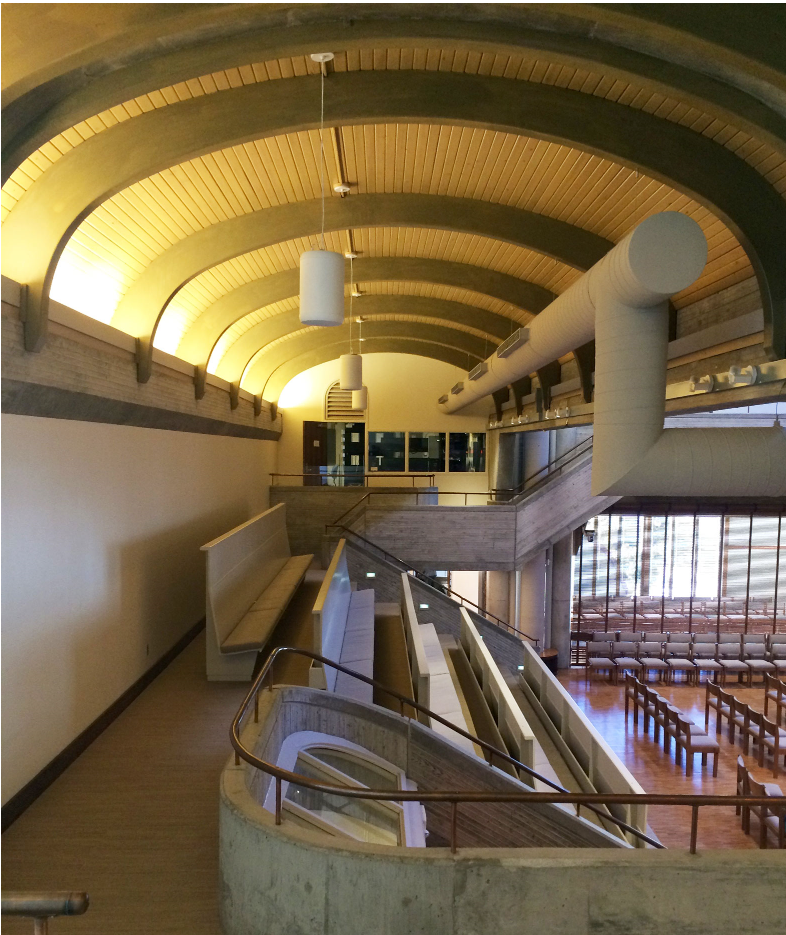
This week, I spent a couple of days with students and faculty at Candler School of Theology. On the day I was preaching, a student took me to the chapel. I had never seen such an unusual worship space design. The student saw me taking it all in and said, “It was designed to look like a train station.” When I cocked my head, he continued, “You know, to remind us that we are just passing through.”

I don’t know if this was the seminary equivalent to an urban legend, but his comment has stayed with me all week: “…to remind us that we are just passing through.” What an important thought! So often we think of the church building as the place we “do” our faith. We grow attached and even sentimental about the place (just see what happens when it’s time to change the carpet or move the altar!). We fail to see this sacred space for what it is supposed to impart to us: strength for this journey of faith and life.

The church building is the place we come to connect with others as we seek to deepen our love of God and neighbor. But we don’t leave behind all that we have received along with our nametags when we exit the building! We are to take that love into the world!

We come to church for spiritual fuel, for healing, for comfort, for strength, for connection. It is the well we journey to but don’t stay at. It is the altar we recommit ourselves before but then leave to live out that commitment in our everyday lives. It is a train station where we receive notification of where we are to go next.

I love church buildings. Whenever I travel, I love stopping in churches. I am mindful that for centuries these sacred spaces have helped the faithful lead fruitful lives that blessed others. My prayer is that tomorrow, when you sit in your special sanctuary, you will also remember the lesson from I Corinthians 3:16: “Don’t you know that you yourselves are God’s temple and that God’s Spirit dwells in your midst?” May this equip you to be a blessing to everyone you encounter throughout the rest of your week.